01
↗
Neuromorphic Circuits
Neuromorphic Circuits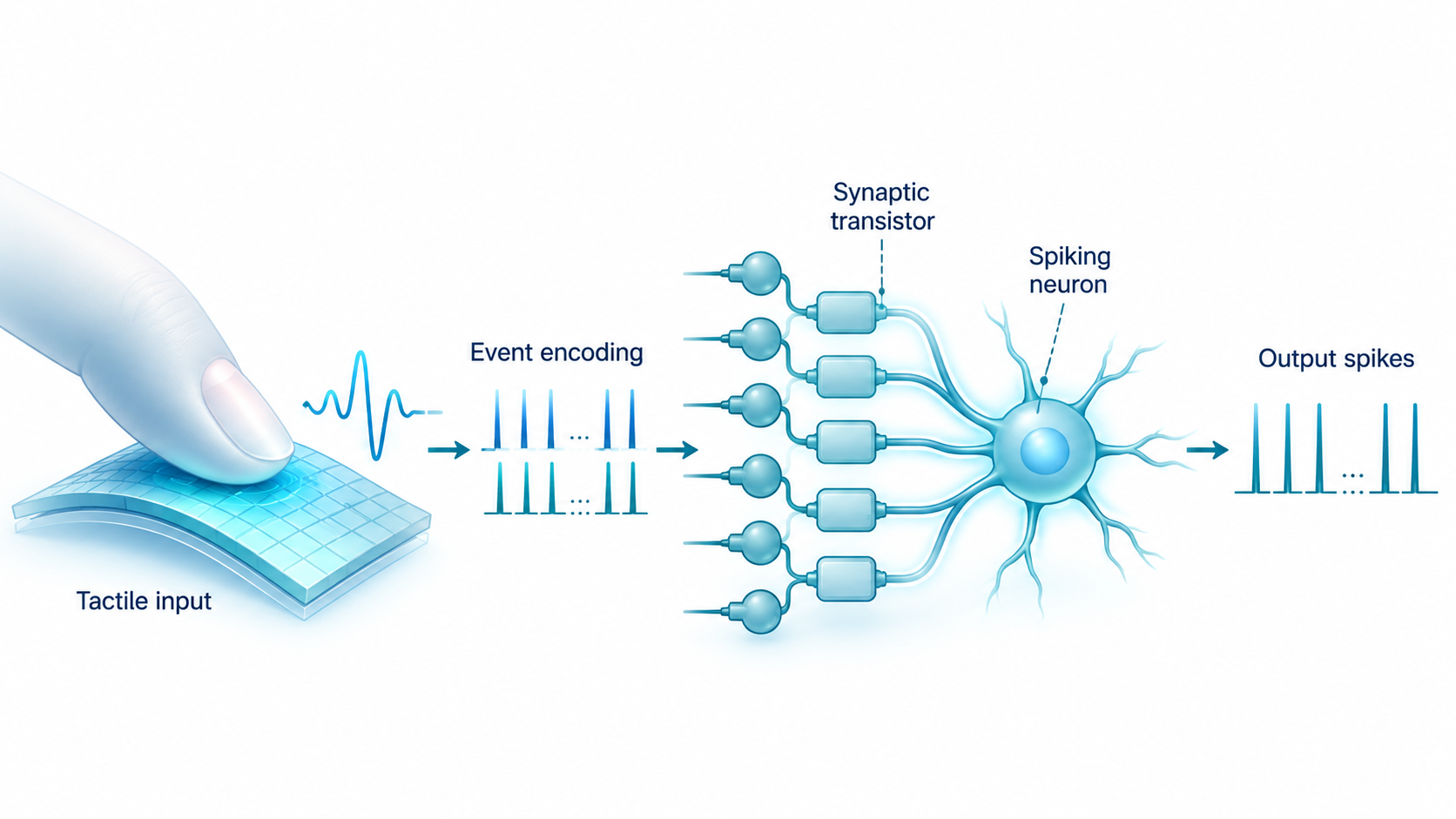
Event-driven circuits that encode and process touch close to the sensor, inspired by biological neural systems.
Exploring tactile intelligence through skin-inspired sensing, neuromorphic electronics, and the seamless integration of matter and computation.
At NeuTouch Lab, we study how physical contact becomes meaningful information — connecting mechanics, emerging devices, electronic circuits, and intelligent systems to build the next generation of tactile technology.
Our research moves across scales, from material deformation and sensor physics to efficient hardware and intelligent perception.
Event-driven circuits that encode and process touch close to the sensor, inspired by biological neural systems.
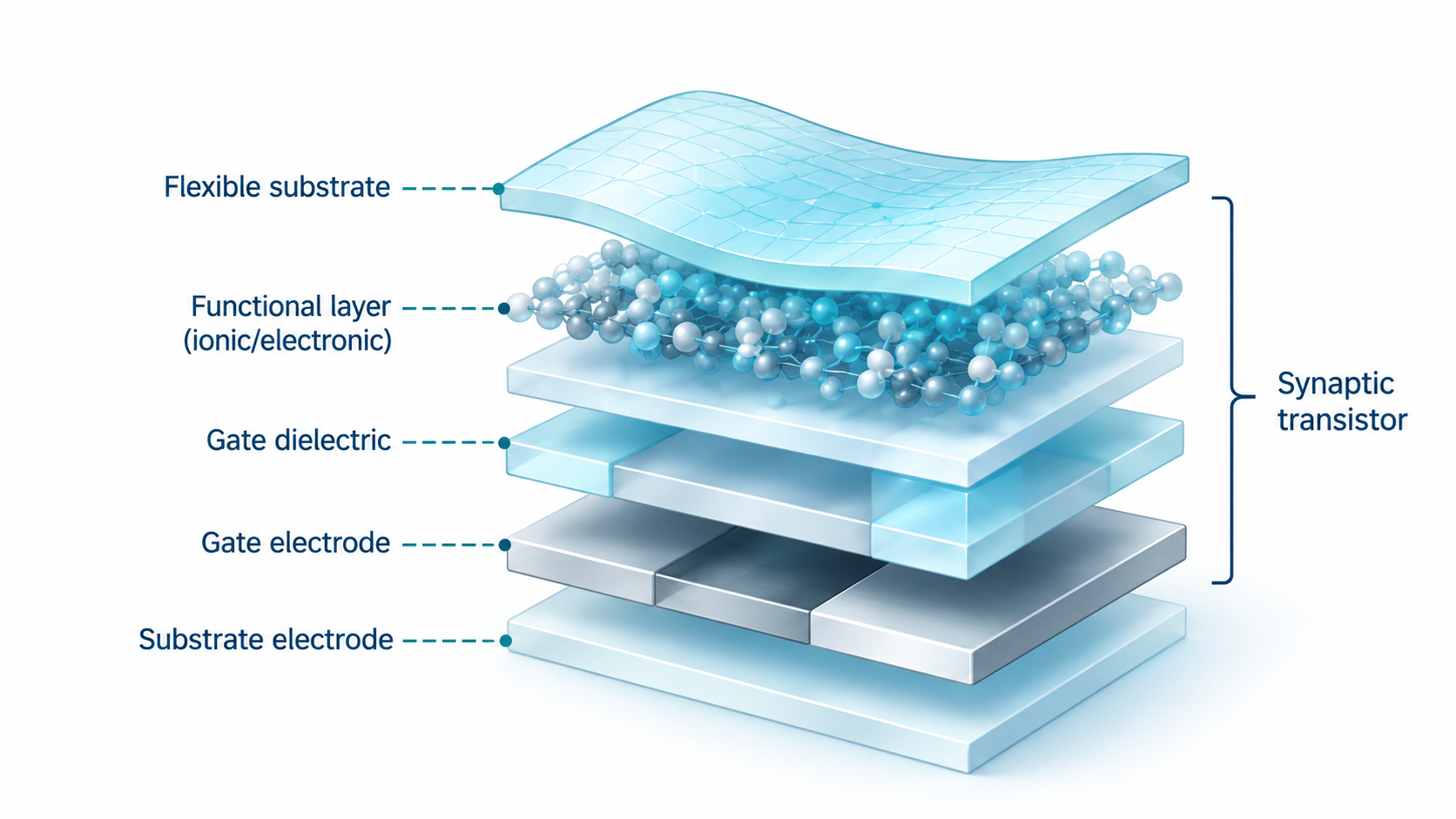
Synaptic transistors that integrate sensing, memory and learning within a single physical element.
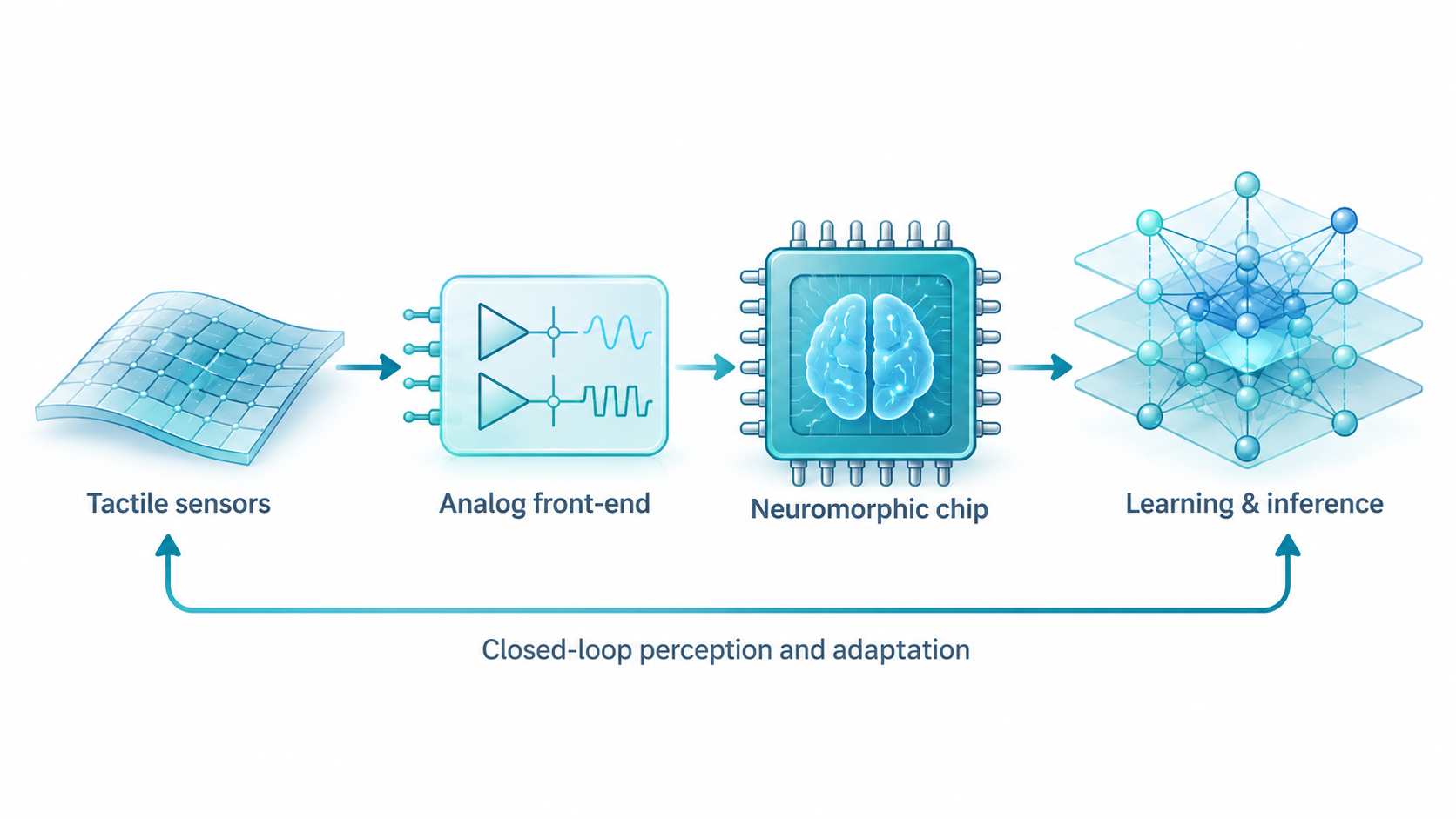
Joint design of sensors, circuits and learning algorithms for efficient tactile intelligence.
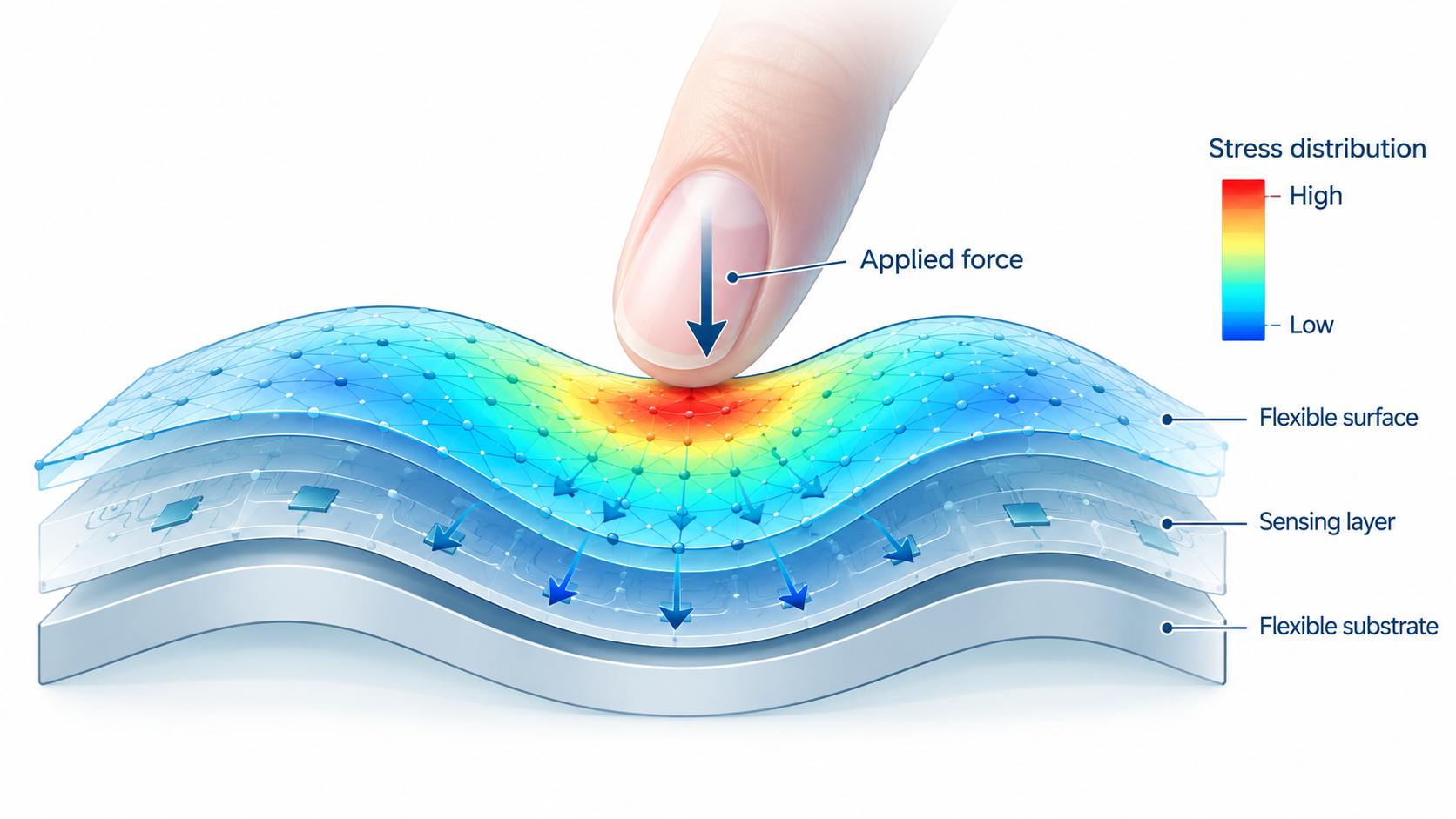
Modeling soft-material deformation under contact to guide sensor design and interpret tactile stimuli.
What if machines could feel the world — not just see it?
From physical signals to meaningful perception — four connected stages in a tactile intelligence system.
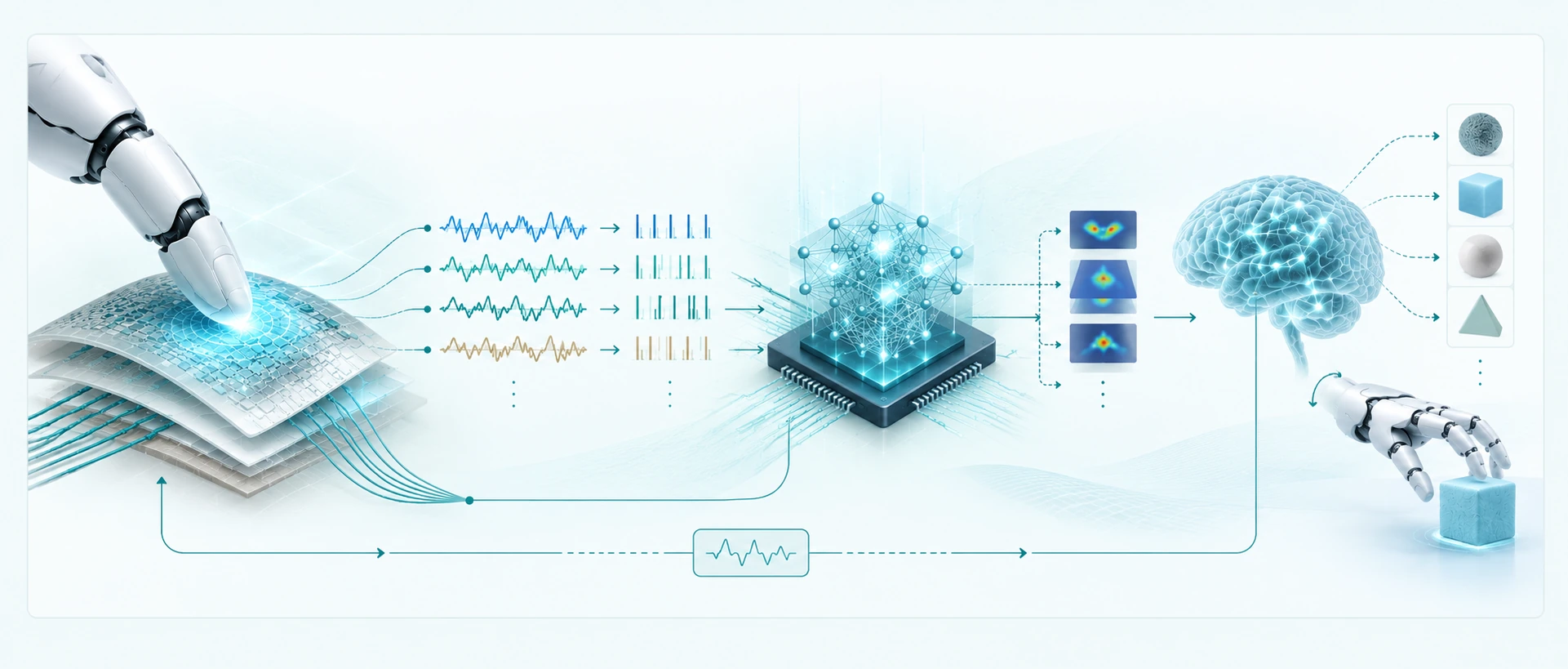
Skin-like tactile sensors convert pressure, contact position and deformation into measurable electrical signals.
Electronic skin · Tactile arraysContinuous tactile signals become temporal features and sparse, event-driven spikes for efficient processing.
Temporal features · Spike trainsDevices, circuits and algorithms cooperate to extract tactile features close to the sensor.
Neuromorphic circuits · Edge AITactile features inform object and contact-state recognition, with feedback guiding robotic interaction.
Object recognition · Closed loopA unified conceptual workflow for explaining research directions; not a claim that all depicted systems have been experimentally demonstrated by the lab.
Peer-reviewed work by Fengyuan Liu and collaborators. Selected visual evidence is reproduced from the original open-access research—not AI-generated artwork.
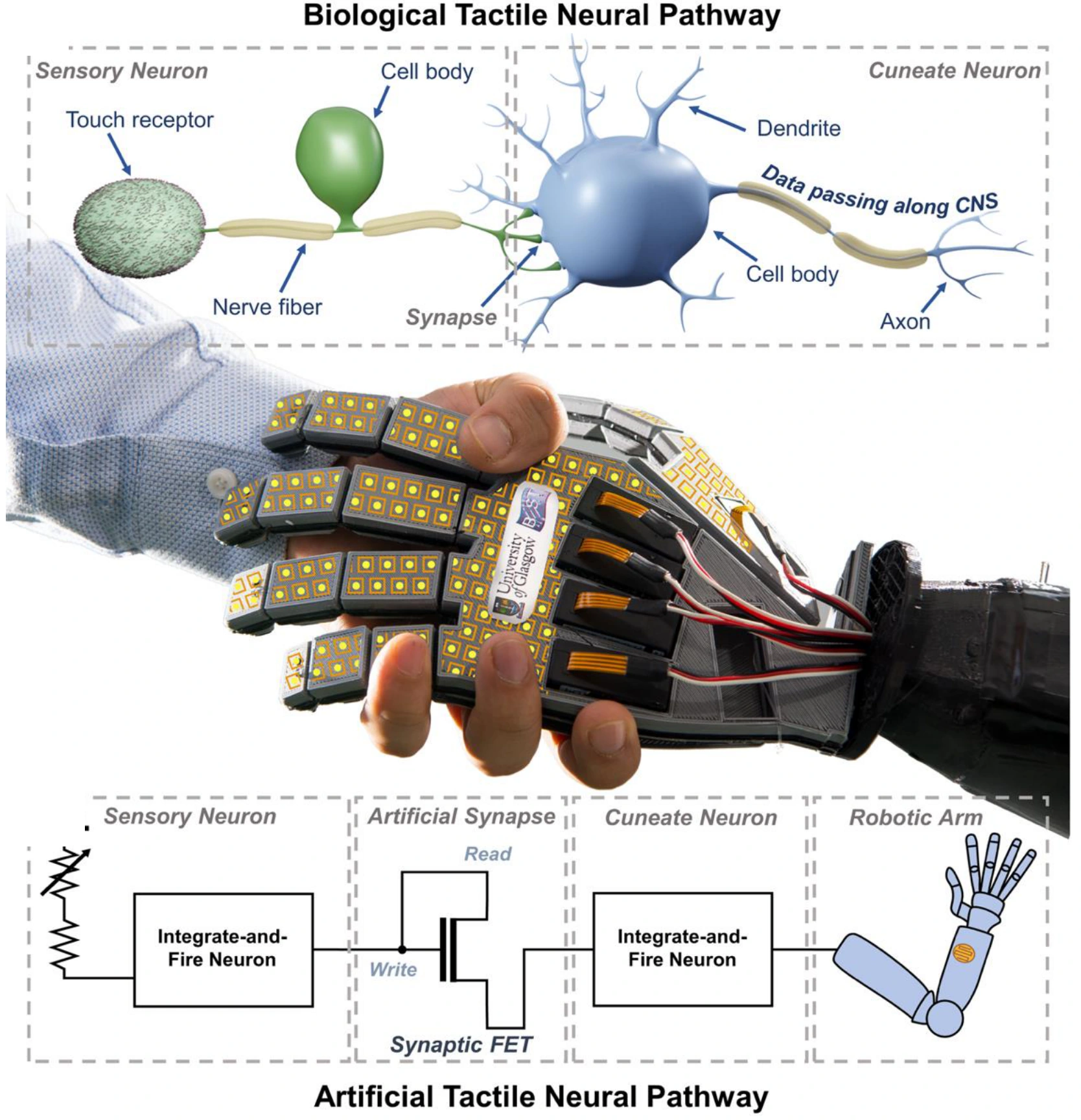
一种柔性计算电子皮肤结合了印刷突触晶体管、事件驱动传感和脉冲神经元电路,使机器人手能够通过局部学习获得触觉反应。
从柔性器件、阵列一致性到机器人触觉学习,展示同一研究中的三组实验结果。
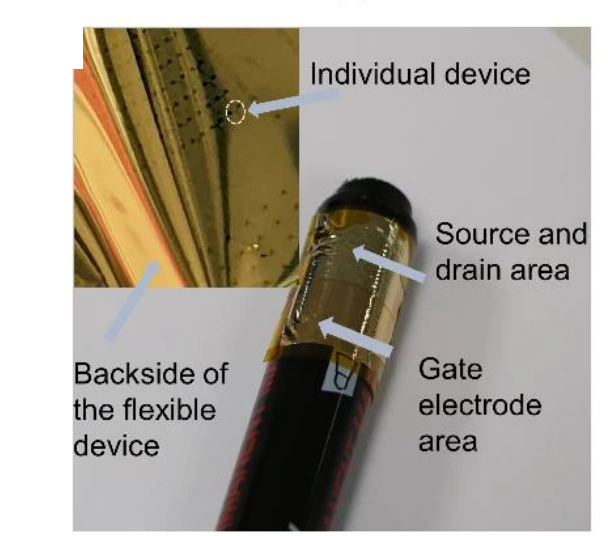
聚酰亚胺衬底上的印刷器件可随基底弯曲。研究进一步表征了机械弯曲前后的器件性能。
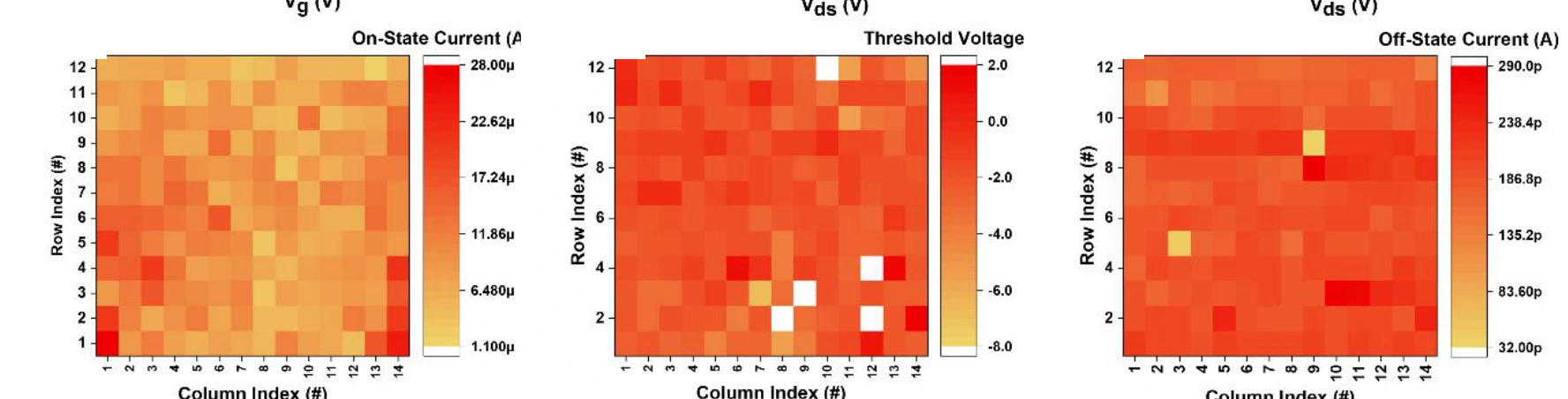
三幅空间分布图分别展示导通电流、阈值电压和关断电流,用于评估印刷晶体管阵列的器件一致性。

关联学习前,机器人未表现出痛觉反射;学习后,相同演示中的机器人产生了相应的反射动作。
论文信息直接链接到来源记录,此处不再额外展示图版。
Reviewing how neuromorphic hardware, printed electronics and distributed sensory computation can support robotic electronic skin.
Read open manuscript ↗DOI 10.1126/scirobotics.abl7344Characterizing ZnO nanowire transistor variability and using statistical models to predict performance across printed devices.
View open-access paper ↗DOI 10.1002/adfm.202412299People, ideas and events shaping the development of NeuTouch Lab.
We welcome motivated researchers interested in circuits, mechanics, robotics, device physics, materials and cross-disciplinary tactile intelligence.
Explore research opportunities and reach out with your research interests and experience.